Custom Portable Power Box: An Engineering Blueprint for Pros
- May 15, 2026
- 227
- DAIER Technical Team
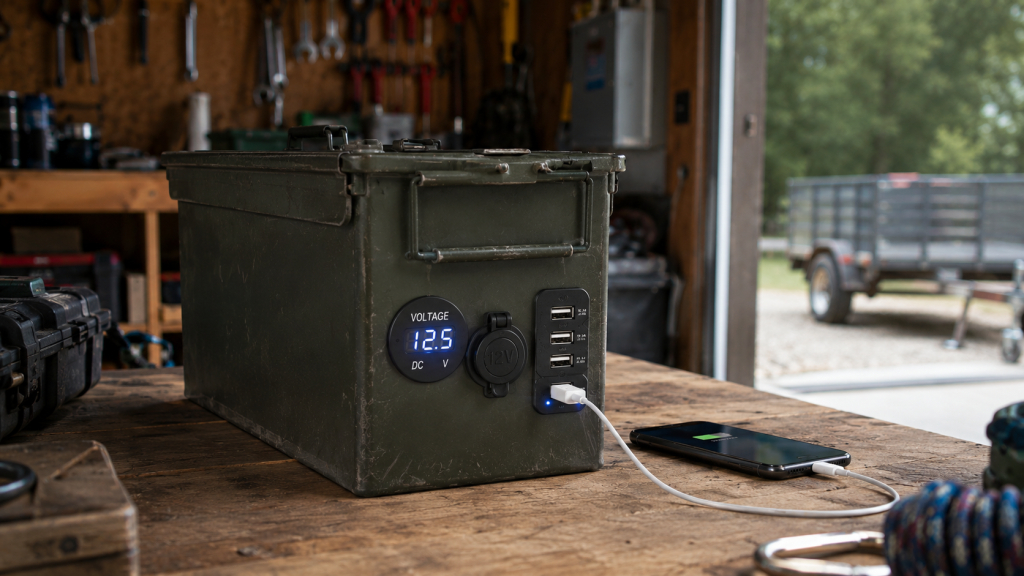
In the rapidly expanding sectors of off-grid living, emergency response, and professional field operations, the demand for high-capacity, rugged, and serviceable power solutions has led to a significant shift. Professional builders are moving away from proprietary “all-in-one” units toward modular 12V portable power boxes. This technical briefing explores the engineering logic behind custom power builds, the critical selection of industrial-grade components, and the strategic advantages of modular energy architecture.
The Strategic Shift Toward Modular Energy Solutions
For years, the portable power market was dominated by sealed, non-serviceable lithium “power stations.” While convenient for casual users, these units often fail to meet the rigorous demands of professional marine, overland, and industrial applications.
The Engineering Advantage of Modularity:
-
Serviceability: In a professional field environment, downtime is a critical failure. A modular power box allows for the instantaneous replacement of individual components—be it a switch, a fuse, or the battery itself—ensuring near-zero system mortality.
-
Scalability: Custom builds allow engineers to specify battery chemistries (LiFePO4 vs. AGM) and discharge rates tailored to specific mission requirements.
-
Component Integrity: By sourcing high-specification individual components, builders can ensure that every touchpoint—from the Rocker Switch to the Bus Bar—meets professional durability standards.
Component Selection: The Bill of Materials (BOM) for Reliability
A professional-grade power box is only as reliable as its weakest link. The selection of materials must prioritize thermal stability, electrical conductivity, and mechanical resilience.
High-Impact Enclosures
The choice of the battery box must account for environmental stressors. High-density polyethylene (HDPE) or reinforced polypropylene provides the necessary impact resistance for transport in off-road vehicles or maritime vessels. The enclosure must provide sufficient internal volume for cable management while maintaining a compact footprint.
Distribution Infrastructure
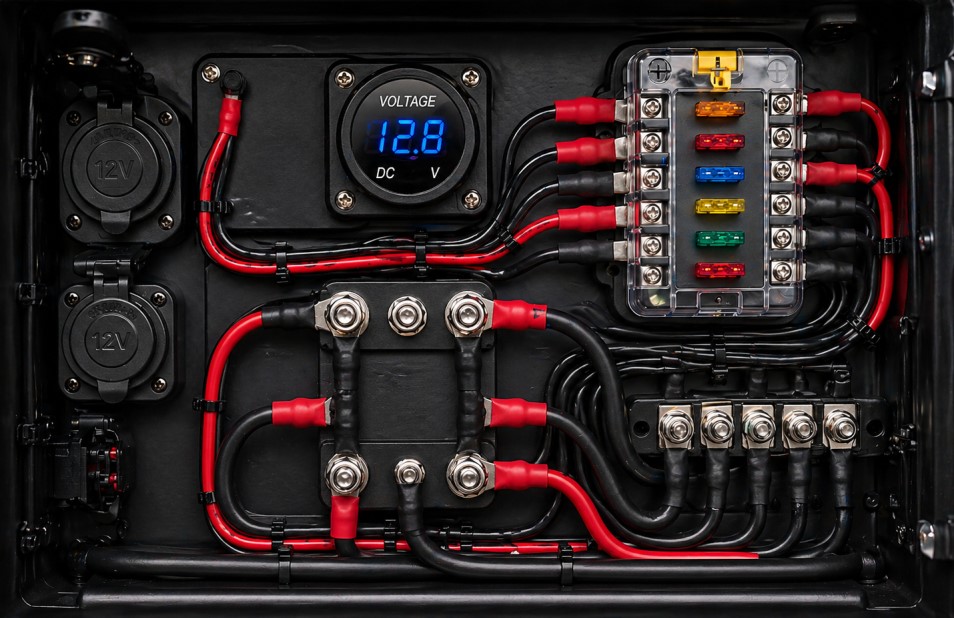
To manage the “spaghetti mess” of wires common in amateur builds, professional integration utilizes a centralized Fuse Block.
- Technical Logic: A fuse block with a tinned-copper bus bar ensures minimal voltage drop across multiple circuits.
- Safety Standards: Utilizing fuse blocks with integrated LED failure indicators significantly reduces the Mean Time to Repair (MTTR) during field operations.
Circuit Protection: The Engineering of Safety
In a portable power system, a catastrophic short circuit is the primary fire risk. Circuit protection must be tiered and redundant.
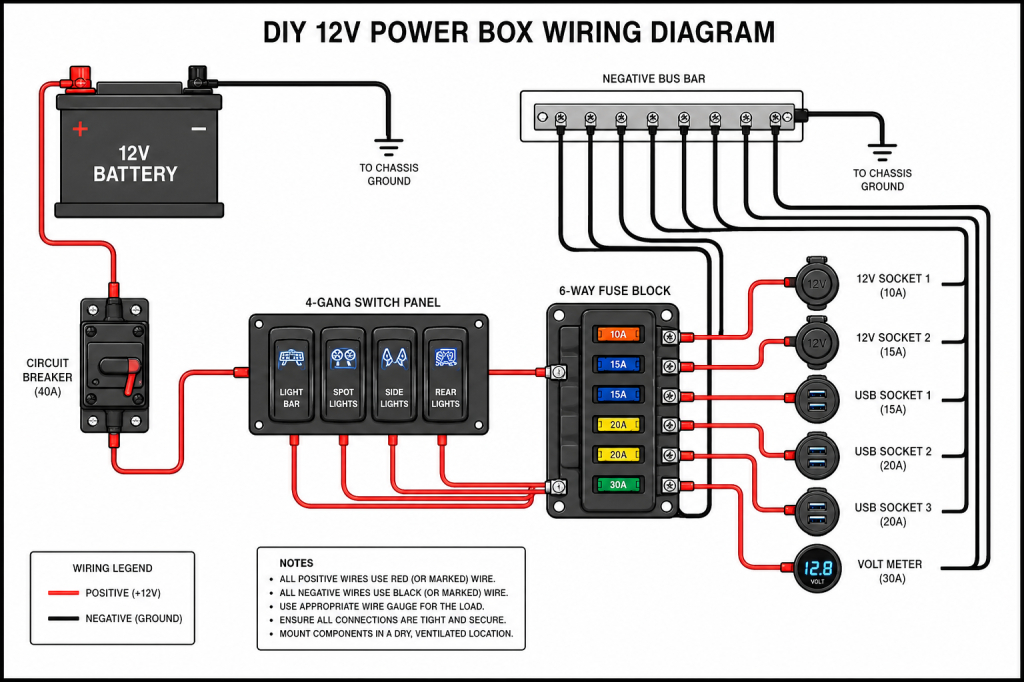
- Primary Protection: A Manual Reset Circuit Breaker should be installed as close to the battery’s positive terminal as possible. This serves as a master disconnect and a failsafe for the entire system.
- Secondary Protection: Individual branch circuits (USB, 12V Sockets, Inverters) must be fused according to the current draw and wire gauge.
- Resistance Management: Every connection point must be engineered to minimize resistance. The use of Tinned Copper Terminals is essential to prevent oxidation, which can lead to localized heating and eventual circuit failure.
Ergonomics and Interface Design: The Control Faceplate
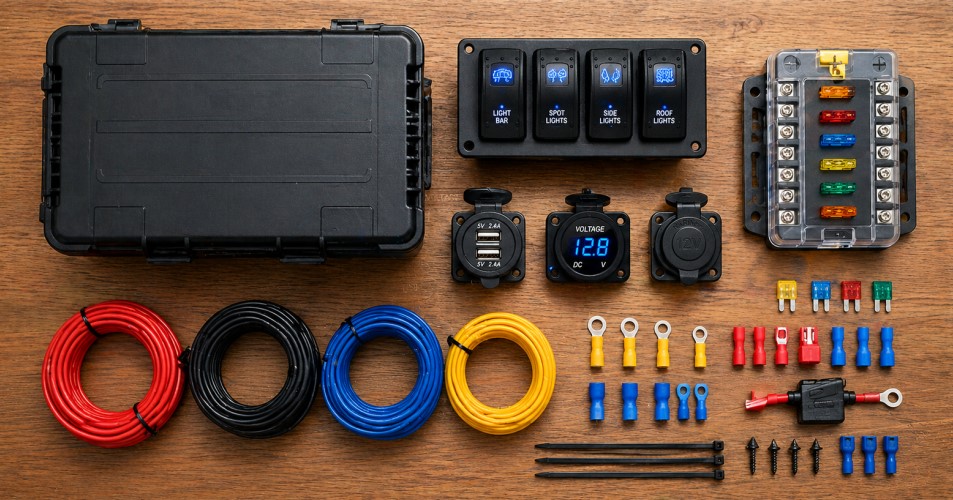
The user interface of a portable power box must be intuitive and rugged. For professional applications, the Switch Panel is the primary interaction point.
- Tactile Feedback: High-quality rocker switches provide positive mechanical engagement, allowing operators to confirm system status even while wearing gloves or in low-light conditions.
- Monitoring: A precision Digital Voltmeter is a non-negotiable requirement for lead-acid systems and highly recommended for Lithium (LiFePO4) builds to monitor state-of-charge and system health in real-time.
- Standardized Connectors: The integration of Anderson-style plugs for high-current input (Solar/DC-DC) and 12V Power Outlets for auxiliary loads ensures compatibility with industrial-standard equipment.
Environmental Resilience: Sealing and Vibration Resistance
Portable power units are frequently exposed to dust, moisture, and intense vibration. A “graduated” approach to Ingress Protection (IP) is necessary.
- Ingress Protection: Any component exposed to the exterior, such as USB Charger Sockets, should ideally meet IP65 or IP67 standards. This prevents the ingress of fine particulates and moisture during transit.
- Vibration Mitigation: Connections must be secured with locking washers or high-quality crimps. In a vessel or off-road vehicle, harmonic vibration can loosen standard screw terminals, leading to intermittent power loss or arcing.
Advanced Integration: Solar and Inverter Systems
To achieve true off-grid autonomy, the power box must serve as a sophisticated energy management hub.
- Solar Harvest: The inclusion of a dedicated high-current input circuit allows for the integration of MPPT or PWM solar controllers.
- Inverter Considerations: When integrating AC power, the box must account for thermal dissipation. Small-form-factor inverters require adequate airflow or heat-sinking to prevent thermal shutdown under continuous load.
- Cable Sizing: Engineers must specify wire gauges (AWG) based on the peak load of the inverter to prevent voltage drop and overheating of the insulation.
Conclusion: Partnering for Professional Power Solutions
The DIY portable power box movement is more than a hobbyist trend; it is a manifestation of the market’s need for durable, customizable, and reliable energy solutions. For builders and OEMs, the path to a high-quality finished product begins with the selection of professional-grade components.
At Daier, we provide the technical building blocks for excellence. From our precision-engineered circuit breakers to our marine-rated switches and fuse blocks, we ensure that your power solutions are built on a foundation of reliability.
Consult with our Technical Sales Team: For wholesale specifications, custom component branding (OEM), or engineering support for your custom build project, contact Daier today.
