Engineering Resilience: A Strategic Blueprint for Marine Electrical System Design
- April 24, 2026
- 860
- DAIER Technical Team
In the global marine industry, electrical reliability is the definitive benchmark of vessel quality. Unlike automotive environments, marine systems operate under a continuous “Triple Threat”: Saline Electrolysis, Continuous Mechanical Vibration, and Extreme Thermal Cycling. This technical briefing outlines a professional blueprint for designing small vessel electrical systems, focusing on material science, graduated ingress protection, and circuit redundancy.
The Marine Environment: Beyond Simple Waterproofing
Designing for the ocean requires a departure from standard terrestrial electrical logic. Water ingress is merely the most visible symptom of a hostile environment; the deeper challenges lie in the conductive nature of saltwater.
- Galvanic Electrolysis: When electrical potential exists between dissimilar metals in a saline electrolyte, material degradation occurs at an accelerated rate. Engineering a system must involve selecting components that minimize this potential.
- Mechanical Fatigue: Hull pounding and engine resonance subject every terminal and mounting bracket to constant stress. Failure often occurs not due to electrical overload, but due to mechanical fatigue at the connection point.
- Condensation Management: Components located in engine bays or under deck lockers face rapid temperature shifts. This leads to internal condensation, making “breathability” or secondary internal sealing as vital as external waterproofing.
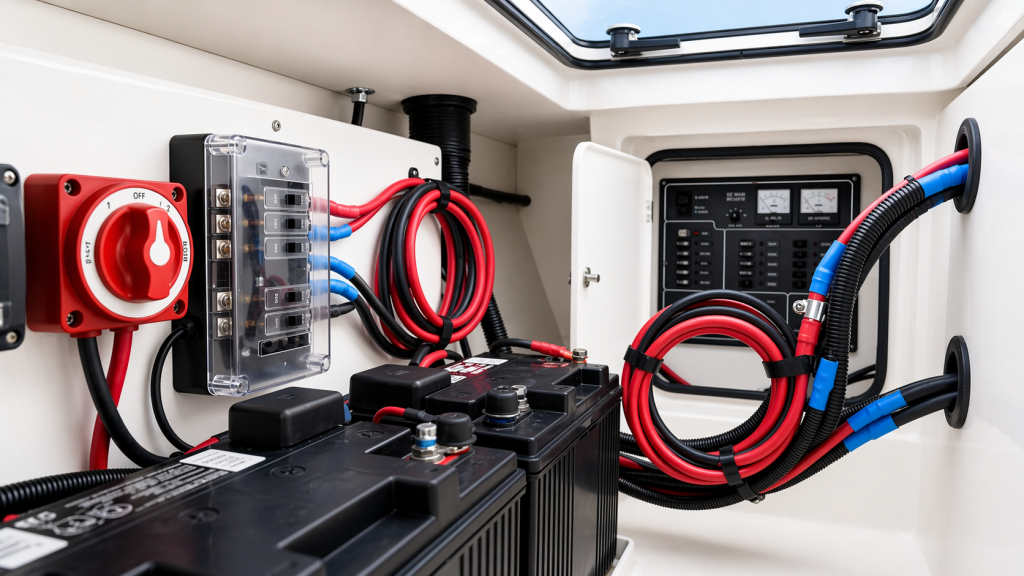
Figure 1: A professional-grade marine electrical locker demonstrating standardized component layout and robust cable management.
Power Source Integrity: High-Torque Battery Management
The foundation of electrical reliability is the battery management system. In marine applications, this system must handle massive cranking currents while remaining impervious to the vessel’s movement.
High-Torque Master Switches
The Battery Switch serves as the primary gatekeeper. Professional-grade builds prioritize switches with high-torque stud terminals for several technical reasons:
- Vibration Mitigation: Standard nuts can loosen under harmonic vibration. A high-torque terminal, combined with locking washers, ensures a low-resistance connection that prevents heat buildup—the primary cause of electrical fires.
- Arc Suppression: Internal detents must be robust to ensure the switch “snaps” into position (1, 2, or Both). This minimizes internal arcing during high-load switching, extending the service life of the component.
Over-Current Protection
Protecting main feeder lines from the battery requires Manual Reset Circuit Breakers. While fuses provide reliable protection, a manual reset breaker offers an essential second function: a repeatable mechanical disconnect. For high-draw equipment like winches or windlasses, this provides the operator with an immediate “kill switch” in the event of a mechanical jam.
Material Science: The Technical Superiority of Tinned Copper
The primary cause of intermittent failure in marine circuits is the degradation of the conductor itself. Standard bare copper wire is fundamentally unsuitable for long-term marine deployment.
Oxidation and Resistance
When bare copper is exposed to salt air, it forms Copper(II) Oxide—a green, non-conductive powder. This corrosion travels via capillary action under the wire insulation, turning the entire cable into a high-resistance heater.
- The Industry Standard: The specification of Tinned Copper Terminals and bus bars is non-negotiable. The tin coating acts as a sacrificial barrier, preventing the copper from oxidizing.
- Connectivity: Tinned surfaces facilitate superior mechanical crimping and solder flow, ensuring that the electrical path remains low-resistance for the operational life of the vessel.
By specifying tinned components for everything from high-current Bus Bars to modular Terminal Blocks, engineers can virtually eliminate galvanic failure in the distribution network.
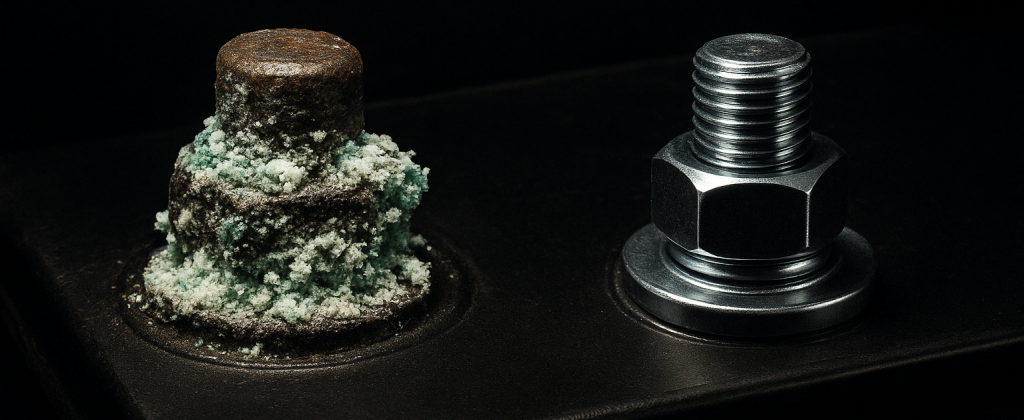
Figure 2: The devastating effects of saltwater electrolysis on bare copper (left) versus the long-term integrity of tinned components (right).
System Distribution: Reducing Mean Time to Repair (MTTR)
Modern vessels integrate complex electronics—AIS, Sonar, and NMEA 2000 backbones—that demand organized, protected power distribution.
Centralized Fuse Block Architecture
The transition from decentralized “inline” fuses to a centralized Marine Fuse Block with LED Indicators is a hallmark of professional engineering.
- Visual Diagnostics: In commercial or rental fleets, reducing MTTR is a financial priority. Fuse blocks with integrated LED diagnostics allow non-technical operators to identify a failed circuit instantly without a multimeter.
- Electromagnetic Integrity: Centralizing distribution reduces the total length of high-current wiring, which in turn reduces electromagnetic interference (EMI) that can plague sensitive sonar and communication equipment.
Environmental Sealing: The “Graduated IP” Strategy
A common over-simplification in marine design is the requirement for “IP67 for everything.” A more sophisticated, cost-effective approach is a Graduated Ingress Protection (IP) Strategy.
- IP67/IP68 (Immersion Protection): Specifically required for deck-mounted Rocker Switches, navigation lights, and bilge components. These must survive high-pressure washdowns and temporary submersion.
- IP65/IP66 (Jet/Spray Protection): Ideal for dashboard panels under a hardtop, where rain and spray are present but submersion is impossible.
- IP20/IP44 (Internal Protection): Appropriate for distribution panels and cabin lighting located in dry, climate-controlled lockers.
Technical Note: Ingress protection must also be considered at the rear of the panel. The application of Dielectric Grease to terminals provides a vital secondary barrier against atmospheric salt-mist, regardless of the switch’s front-facing IP rating. For a detailed breakdown of international testing standards, refer to our technical IP Ratings Decoded Guide to ensure every zone of the vessel is appropriately spec’d.
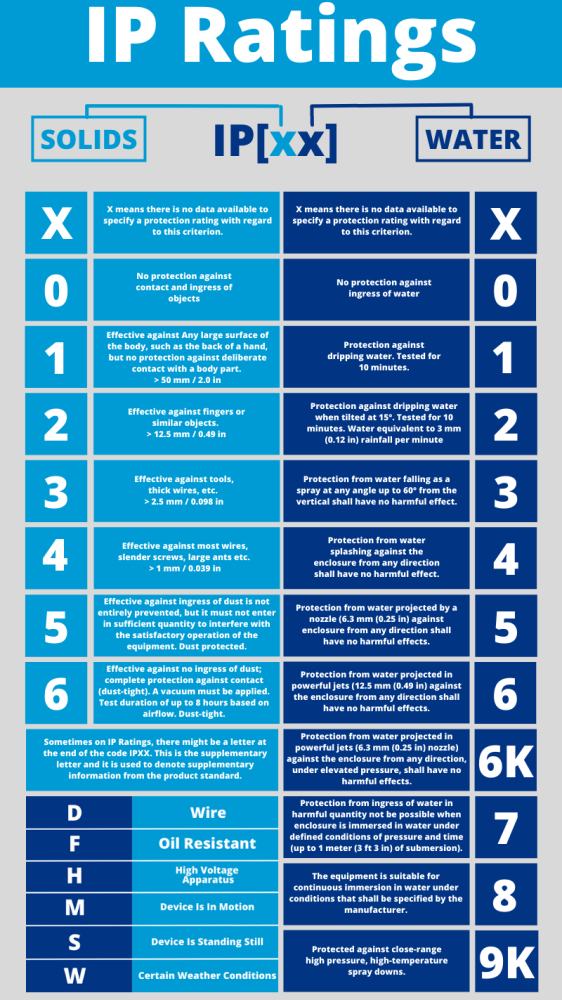
Figure 3: International Ingress Protection (IP) rating standards. Professional vessel design requires a strategic application of these ratings based on environmental exposure zones.
Critical Load Redundancy: Bilge Pump Automation
The bilge pump system is the most safety-critical circuit on any vessel. Engineering redundancy into this system is a primary requirement.
- The “Always-On” Logic: The “Auto” leg of the bilge circuit must bypass the main battery switch. This ensures that the vessel remains protected from water ingress even when docked and unattended.
- Inductive Load Management: High-capacity pumps create significant inductive surges. Utilizing Automotive-Grade Relays to drive the pump protects the delicate contacts of the dashboard switch from pitting and carbon buildup, ensuring thousands of cycles of reliable operation. For advanced circuit schematics and installation logic, consult our professional Relay Wiring Guide to optimize your bilge pump control systems.
Conclusion: The Engineering of Reliability
Reliability at sea is never accidental; it is the result of deliberate component selection and a deep understanding of environmental stressors. By prioritizing tinned materials, high-torque mechanical connections, and a graduated approach to ingress protection, marine engineers can build systems that withstand the harshest conditions on Earth.
Daier remains committed to providing the technical backbone for marine excellence. From precision-molded switches to high-conductivity bus bars, every component is engineered to be the most reliable link in the electrical chain.
For technical specifications and bulk procurement: Contact our marine engineering division for wholesale data sheets and custom OEM solutions.
