Selecting the Right LED Indicator Lights: A Professional Guide for Automotive, Marine, and Industrial Systems
- April 10, 2026
- 327
- DAIER Technical Team
Mastering Material Science, Industrial Specifications, and Assembly Efficiency in Modern Control Systems
Beyond the Glow: The Functional Role of Signal Intelligence in HMI Design
In the rapidly evolving landscapes of industrial automation, automotive engineering, and marine systems, the flow of information is paramount. But how does a complex machine communicate its health and status to its human operator? The answer lies in the Indicator Light, also known as a Pilot Light or Signal Light. While seemingly small, these components are the primary visual interface of the Human-Machine Interface (HMI).
From an engineering and manufacturing perspective, selecting the right indicator is not merely a matter of finding a “light that works.” It is about ensuring system reliability, adhering to safety standards, and optimizing production costs. At Daier, we view the indicator light as a strategic component that defines the bridge between machine logic and human action.
Industry Standards: Decoding Pilot Light Color Logic and Functional Safety
Before diving into technical specifications, it is essential to understand the functional role of these components. An indicator light is a solid-state or incandescent signaling device designed to transmit specific status data.
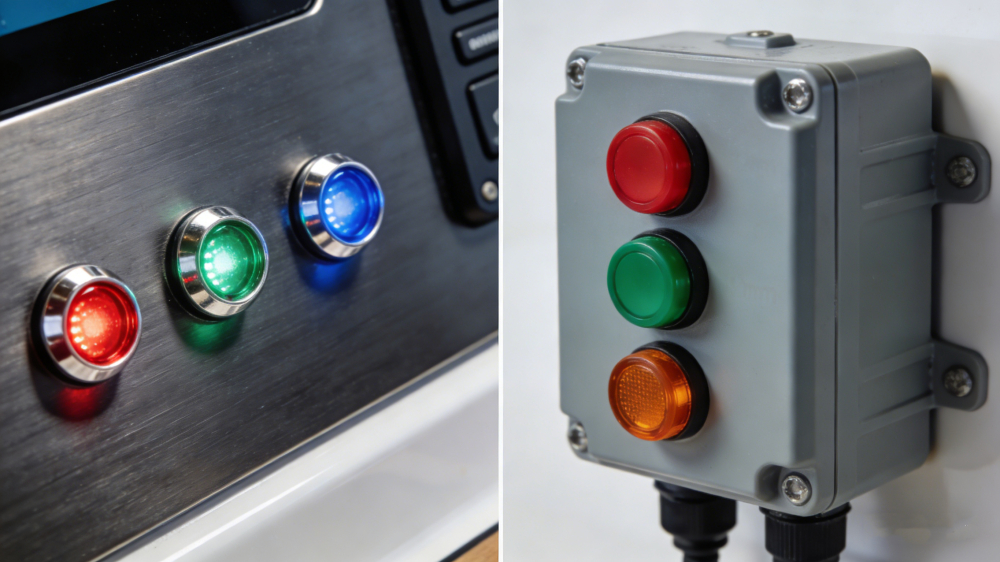
Unlike illumination lighting, which is meant to light up a space, an indicator light is a data transmitter. In modern engineering, this is often standardized through color-coded logic:
- Red: Indicates an emergency, a failure, or a critical danger that requires immediate intervention.
- Green: Signals normal operation, a safe state, or that a system is ready for use.
- Amber/Yellow: Acts as a warning for a transition state or a non-critical fault.
- Blue/White: Often used for informational purposes or custom system status.
Historically, the industry relied on incandescent bulbs, which were prone to failure due to filament vibration. Today, LED (Light Emitting Diode) technology has become the mandatory standard. LEDs offer over 50,000 hours of service life, draw minimal current, and are impervious to the mechanical vibrations found in off-road vehicles and marine engine rooms.
Precision Specifications: Choosing the Correct Mounting Diameters and Electrical Tolerances
For a professional buyer or OEM designer, the “fit” of a component is defined by standardized dimensions and electrical tolerances.
Panel real estate is often limited. Choosing the correct diameter is the first step in panel design:
- 6mm & 8mm (Miniature): These are the go-to sizes for high-density control panels, motorcycle instrument clusters, or diagnostic tools where every millimeter counts.
- 12mm & 16mm (Industrial Standard): The most popular sizes for automotive dashboards and marine consoles. They provide enough surface area for high-precision laser-etched symbols, ensuring clarity in high-stress environments.
- 22mm (Heavy Industrial): Used in factory floor automation and large-scale power distribution cabinets to ensure visibility from a distance.
System voltage must be carefully matched to the indicator’s internal resistance. Most mobile applications (boats, trucks, RVs) utilize 12V or 24V DC. Industrial grids typically require 110V or 220V AC. As a direct manufacturer, Daier pre-configures resistors within the housing, ensuring the LED operates at its peak efficiency without the risk of burnout from voltage spikes.
Material Science: Metal vs. Plastic LED Housings – Choosing for Durability and Performance
The debate between metal and plastic is central to component longevity. As a manufacturer, we evaluate these materials based on their Environmental Stress Profile—the specific conditions they will face during their lifecycle.
The Engineering Advantages of Rugged Metal Indicator Lights
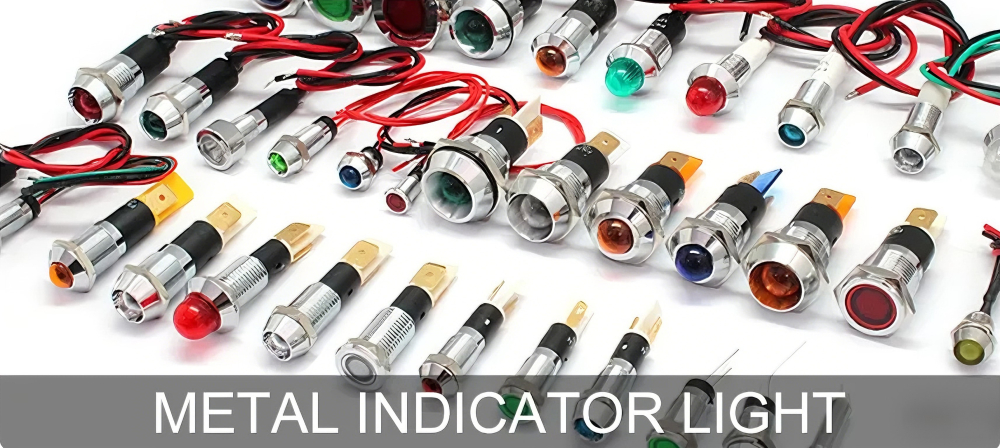
Metal indicators, typically manufactured from chrome-plated brass or anodized aluminum, are engineered for high-performance and high-stress environments.
- Mechanical Integrity: Metal provides superior resistance to impact. On a construction site or a racing circuit, a dropped tool or flying debris will not crack a metal housing. This is often referred to as “Anti-vandal” protection.
- Thermal Management: LEDs generate a small amount of heat. Metal housings act as natural heat sinks, dissipating thermal energy efficiently. This is vital for long-term reliability in high-ambient-temperature engine bays.
- Laser Etching Precision: Metal allows for permanent laser-etched symbols. These will not fade or peel over time, ensuring that critical safety signals (like “Oil Pressure”) remain visible for the life of the machine.
When to Optimize Projects with Lightweight Polymer/Plastic Solutions
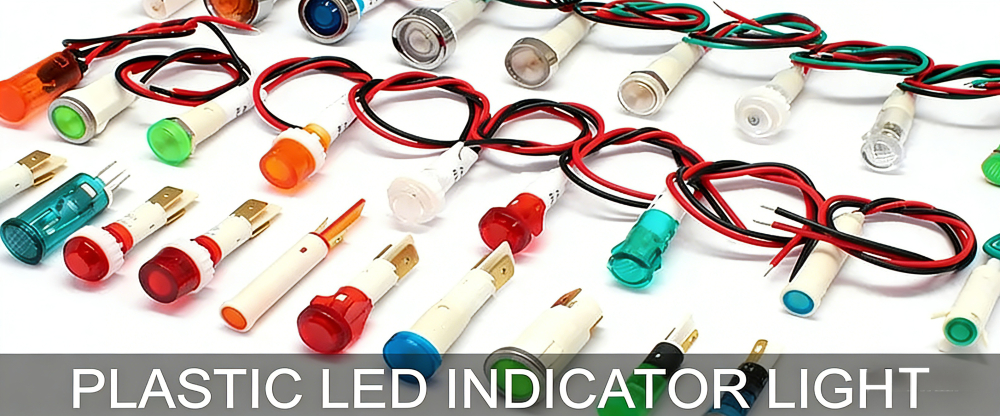
Plastic housings (typically Polycarbonate or ABS) are the engineering choice for controlled environments and projects where weight and speed are priority metrics.
- The Snap-in Efficiency: One of the primary advantages of plastic is its flexibility. This allows for “Snap-in” designs (like the WL-02S series) that require no mounting nuts. For a production line assembly of thousands of units, this tool-less installation significantly reduces labor costs.
- Dielectric Insulation: Plastic is a natural insulator. In high-density industrial control cabinets, a non-conductive housing provides an extra layer of safety against accidental short circuits to the panel frame.
- Cost vs. Scale: Plastic is significantly more cost-effective for mass-produced interior panels, such as those found in RVs or consumer-grade power distribution units.
Optimizing Assembly Efficiency: Reducing Total Cost of Ownership (TCO) in Production
As a manufacturing partner, Daier focuses on how our components affect the client’s bottom line. Two key areas define this efficiency:
The mounting style impacts the labor hours required for assembly. Threaded mounts with nuts and lock washers provide maximum vibration resistance for off-road chassis. However, for interior panels, snap-in designs (like the WL-02S series) allow for tool-less installation, reducing the time spent on the assembly line and lowering the overall production cost.
Soldering tiny pins in the back of a dark dashboard is a high-risk, time-consuming task. Our pre-wired indicators are sealed with epoxy at the base. This provides a two-fold benefit:
- Moisture Ingress Protection: It prevents humidity and water from entering the housing from the rear of the panel.
- Reliability: It ensures a solid, vibration-proof electrical connection that is far superior to manual field soldering.
Technical FAQ: Professional Answers for Electrical Engineers and Procurement Managers
Q1: What does the IP67 rating mean for an indicator light?
A: An IP67 rating ensures the component is completely dust-tight (the ‘6’) and can withstand full submersion in water up to 1 meter for 30 minutes (the ‘7’). For marine and exterior automotive use, IP67 is the professional minimum to ensure longevity against sea spray and pressure washing.
Q2: Can I use a 12V LED indicator on a 24V system?
A: Not directly. Doing so will immediately burn out the LED. However, as a manufacturer, we can integrate specific resistors during production to make any of our indicators 24V-compatible. Always specify your system voltage during the procurement process.
Q3: Does polarity matter when wiring these lights?
A: Yes. LEDs are directional. Connecting the positive lead to the negative terminal will result in no light. Most professional-grade indicators follow the standard Red (Positive) and Black (Negative) color coding to prevent installation errors.
Q4: Why choose laser-etched symbols over printed ones?
A: Printed symbols are prone to wearing off due to physical contact, cleaning chemicals, or UV exposure. Laser etching permanently removes a layer of the bezel material, creating a symbol that lasts as long as the component itself.
A: Anti-vandal components are designed with a low-profile, high-strength housing (usually stainless steel) that is difficult to pry off, damage, or sabotage. They are the standard for public kiosks and heavy-duty industrial machinery.
Conclusion: Elevating Your System Reliability with a Professional Manufacturing Partner
Selecting an indicator light is more than a simple purchase; it is the selection of a diagnostic partner for your machine. Whether your project demands the rugged, laser-etched precision of metal or the rapid assembly and insulation of plastic, Daier provides the manufacturing depth to support your scale.
By choosing a partner who understands the material science and assembly logic of these critical components, you ensure that your final product is professional, reliable, and built to the highest global standards.
