Selecting the Right Switch Configuration: A Technical Guide to SPST, SPDT, DPST, and DPDT Switches
- June 9, 2026
- 313
- DAIER Technical Team
In electromechanical system design and industrial component sourcing, selecting the correct switch configuration is a critical decision. The circuit configuration of a switch dictates not only its basic control logic but also its long-term electrical safety, mechanical wear, and compliance with international standards.
Using an incorrect configuration can lead to catastrophic system integration issues, circuit damage, or failure during safety audits. This technical reference breaks down the mechanics of poles, throws, and contact behaviors, providing design engineers and procurement professionals with the detailed specifications required for precise component selection.
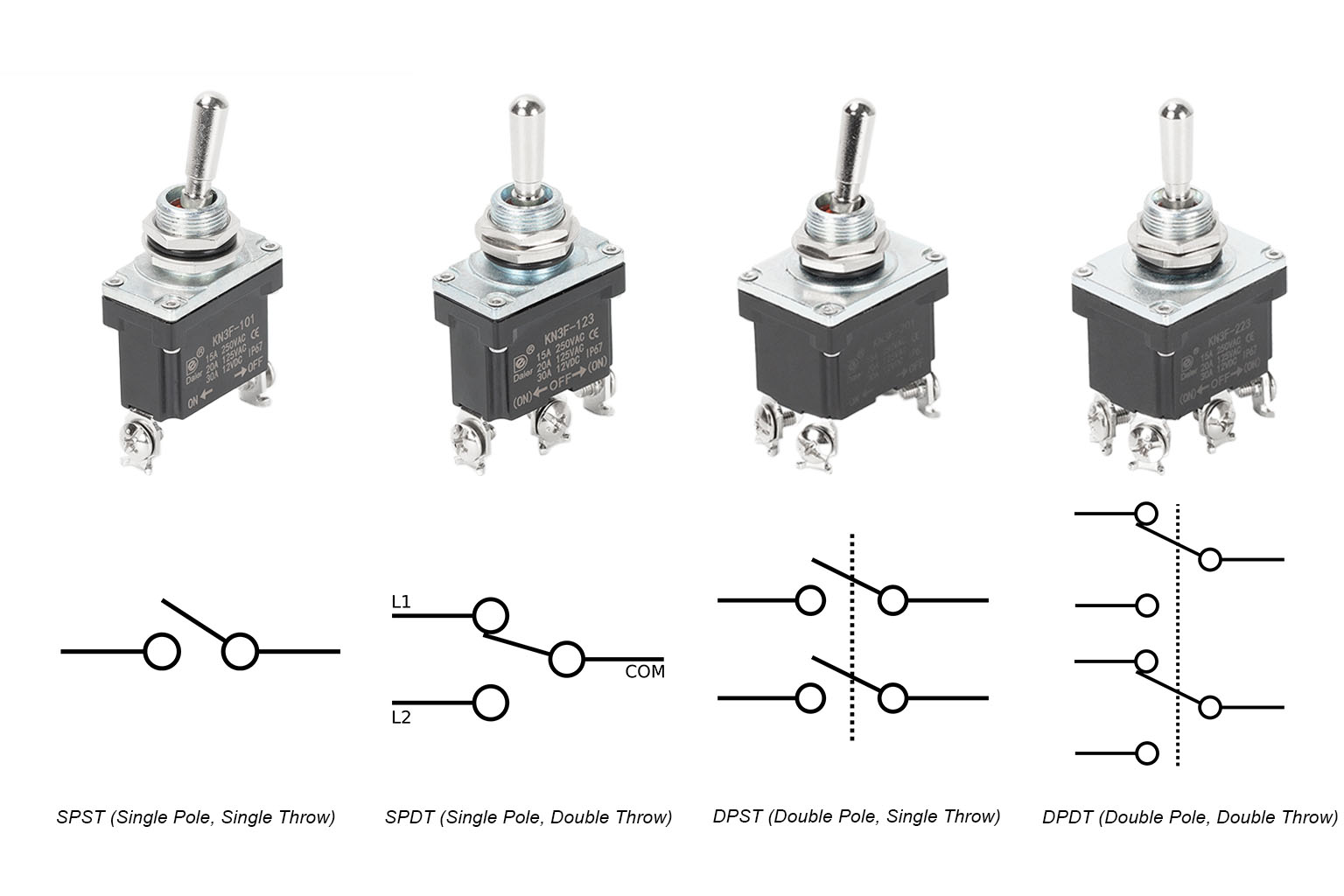
Figure 1: Standard toggle switches alongside their corresponding schematic circuit symbols.
1. Core Electromechanical Concepts: Poles, Throws, and Defaults
Before selecting a switch, it is necessary to understand the mechanical contact structures inside the switch housing. These are defined by two key variables:
- Pole (P): This indicates the number of separate electrical circuits that a single switch mechanism can control simultaneously. A single-pole (SP) switch controls one circuit line, while a double-pole (DP) switch controls two electrically isolated circuit lines using a single actuator.
- Throw (T): This indicates the number of alternative output pathways available for each individual pole. A single-throw (ST) switch has one closed position, acting as a simple open/closed gate. A double-throw (DT) switch can route its input to one of two different output terminals.
Contact Default States (NO vs. NC)
For single-throw switches, engineers must specify the default state of the contacts when the actuator is at rest:
- Normally Open (NO): The contacts are separated, meaning the circuit is open (OFF) by default. Actuation closes the contacts to complete the circuit.
- Normally Closed (NC): The contacts are touching, meaning the circuit is closed (ON) by default. Actuation opens the contacts, interrupting the current flow.
2. In-Depth Analysis of Switch Configurations
Each switch configuration is engineered for specific circuit integration needs. Below is a detailed technical breakdown of the four primary configurations.
SPST (Single Pole, Single Throw)
The SPST is the most fundamental switch configuration. It features two terminals: one input and one output.
- Terminal Count: Typically 2 pins (non-illuminated) or 3 pins (if integrated with an LED status indicator).
- Functionality: Basic ON/OFF switching.
- Typical B2B Applications:
- Main system power controls for commercial appliances.
- Control panel circuit triggers.
- Low-draw DC auxiliary equipment controls.
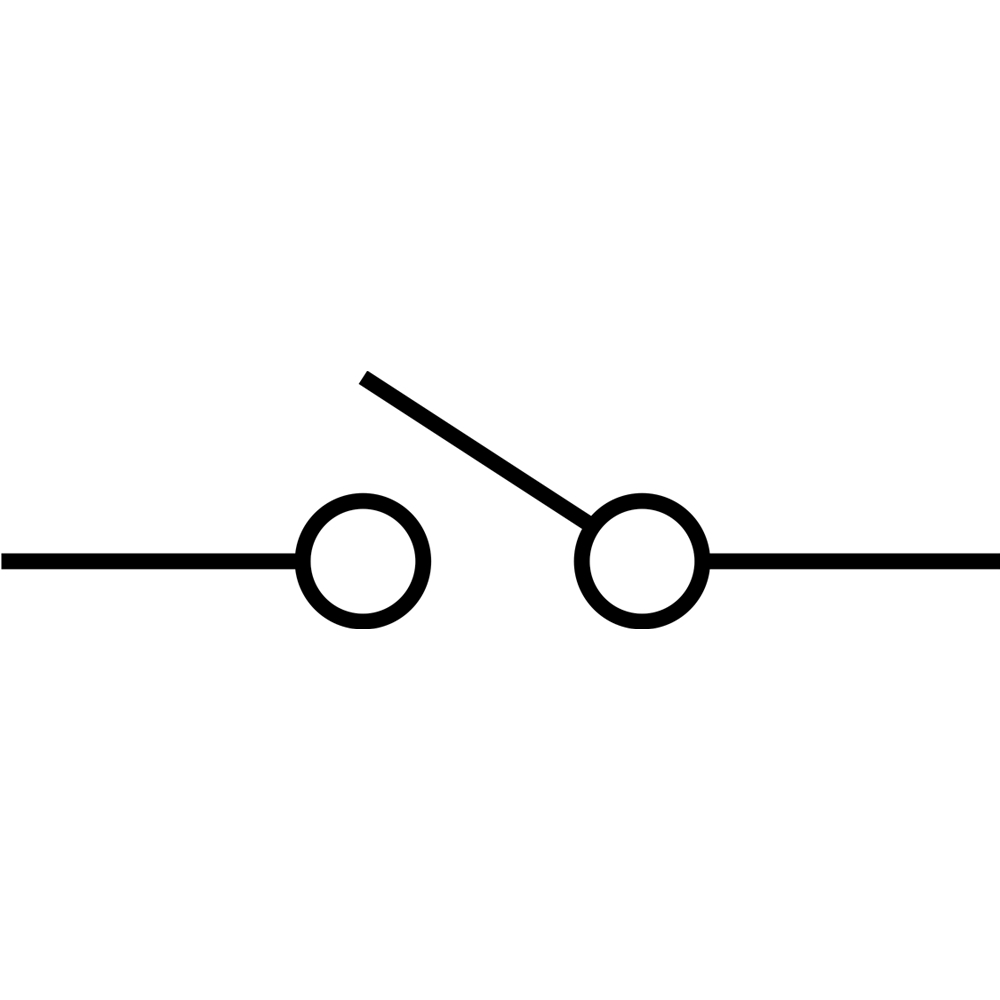
Figure 2: Electrical schematic representation of a Single Pole, Single Throw (SPST) switch.
SPDT (Single Pole, Double Throw)
An SPDT switch features three terminals: one common input (COM) and two selectable outputs (L1 and L2).
- Terminal Count: 3 pins (non-illuminated).
- Functionality: Routes a single power or signal source to one of two alternative loads (A/B switching). Depending on the actuator mechanics, it can be configured as ON-ON (continuous connection to one path) or ON-OFF-ON (includes a center-off position).
- Typical B2B Applications:
- Manual/Auto Selection: Switching control logic between manual overrides and automated PLC loops.
- Dual-Speed Control: Directing power to either high-speed or low-speed winding circuits in ventilation fans.
- Redundant Signaling: Switching status indicators between green (normal operation) and red (fault status).
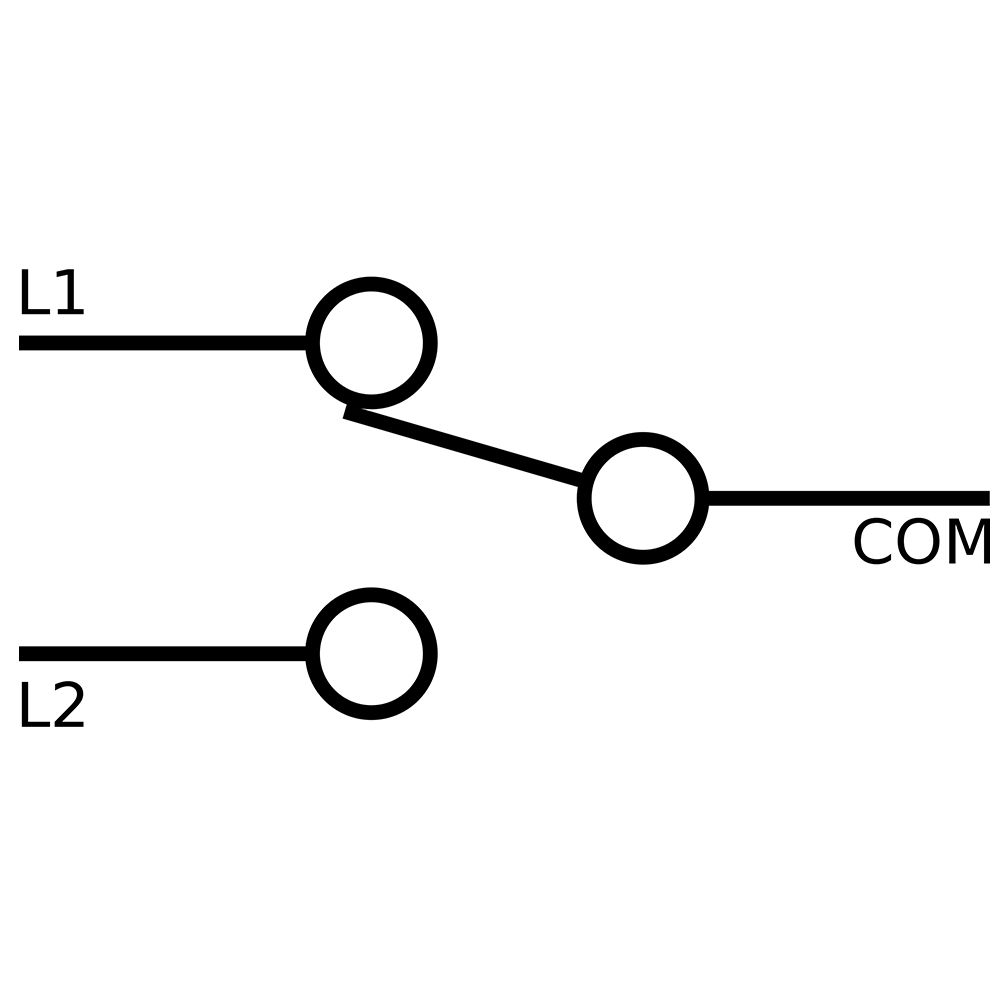
Figure 3: Electrical schematic of a Single Pole, Double Throw (SPDT) switch with designated output paths.
DPST (Double Pole, Single Throw)
A DPST switch acts as two independent SPST switches controlled by a single physical actuator. It features four terminals: two inputs and two corresponding outputs.
- Terminal Count: 4 pins (non-illuminated).
- Functionality: Simultaneously connects or disconnects two separate circuits.
- Typical B2B Applications:
- Dual-Phase Safety Isolation: Cutting both the Live (L) and Neutral (N) lines of an AC main power line simultaneously. This is a standard safety requirement for CE and UL compliance in many machinery categories.
- Mixed Voltage Switching: Controlling a high-voltage power line (e.g., 240VAC load) and a low-voltage status signal line (e.g., 24VDC to PLC) simultaneously while maintaining physical isolation between the two.
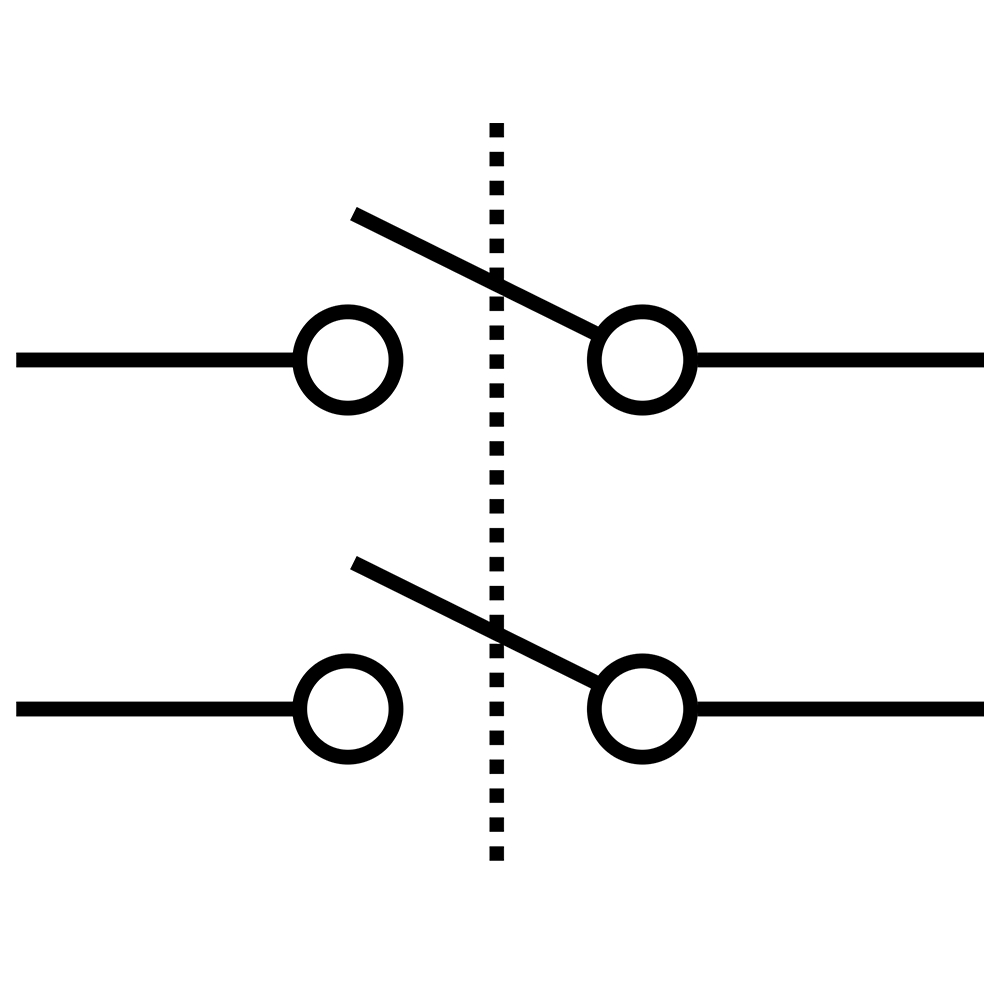
Figure 4: Schematic of a Double Pole, Single Throw (DPST) switch illustrating synchronous mechanical actuation of two isolated lines.
DPDT (Double Pole, Double Throw)
A DPDT switch consists of two isolated SPDT circuits actuated by a single control mechanism. It features six terminals: two common inputs (COM1, COM2) and four outputs.
- Terminal Count: 6 pins.
- Functionality: Simultaneously routes two separate inputs to two alternative outputs. It can be utilized in ON-ON, ON-OFF-ON, or ON-ON-ON configurations.
- Typical B2B Applications:
- H-Bridge Polarity Reversal: Reversing the direction of DC motors, linear actuators, or winches by swapping positive and negative voltage paths.
- System Redundancy: Transferring primary control signals and primary backup signals to a secondary redundant system simultaneously in critical equipment.
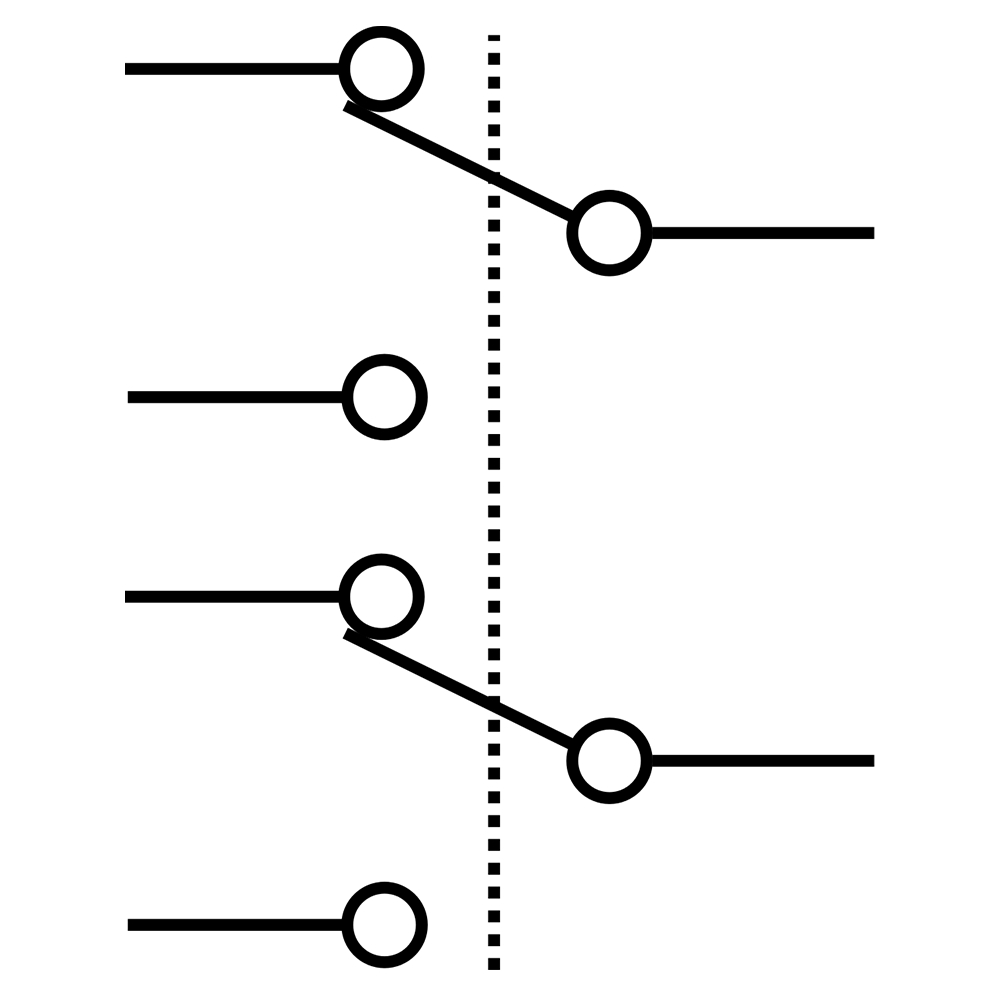
Figure 5: Schematic of a Double Pole, Double Throw (DPDT) switch showing mechanical linkage for complex routing.
3. Operational Mechanics: Maintained vs. Momentary
When specifying a switch for industrial applications, the mechanical actuation behavior is just as critical as the contact configuration.
Maintained (Latching / Locked)
Maintained switches stay in the physical position they are toggled into by the operator. They remain in that state until acted upon again.
- Industry Notation: Standardized text without parentheses (e.g., ON-OFF, ON-ON).
- Usage: System power supplies, HVAC fan selectors, and continuous-run pump controls.
Momentary (Spring-Return / Self-Resetting)
Momentary switches only maintain their actuated state while physical pressure is actively applied. An internal return spring forces the contact arm back to its default position when the operator releases the actuator.
- Industry Notation: Designated with parentheses in technical datasheets (e.g., (ON)-OFF, (ON)-OFF-(ON), or ON-OFF-(ON)).
- Usage: Heavy machinery start-up sequences, emergency alarm tests, limit switches for positioning, and jogging controls.
4. Key B2B Sourcing Specifications
When drafting RFQs or specifying components, ensure you verify these parameters:
- Load Type: Ensure the rating matches your load type. Inductive loads (motors, solenoids) require much higher arc suppression capabilities than resistive loads (heaters).
- Contact Material:
- Silver Plating: Best for standard power switching (>1A, >12V).
- Gold Plating: Essential for low-current signal switching (<100mA, <5V) to prevent contact tarnish.
- Ingress Protection (IP Rating): Specify IP67/IP68 for marine, outdoor, or industrial washdown environments.
- Certifications: Verify safety marks (UL, cUL, CE, RoHS, REACH) to comply with target market regulations.
5. Technical Selection Matrix
Use this quick-reference table for preliminary component mapping:
| Requirement | Terminals | Configuration | Mechanical Type | Common Applications |
| Simple ON/OFF for single-phase power | 2 | SPST | Maintained | Panel main power, lighting |
| Switch one control signal between two circuits | 3 | SPDT | Maintained or Momentary | Manual/Auto mode, dual-speed fan |
| Cutting hot and neutral lines simultaneously | 4 | DPST | Maintained | AC main isolation, safety interlocks |
| Directing two separate systems on/off with one action | 4 | DPST | Maintained | Dual-zone industrial heating |
| DC motor polarity reversal (forward/reverse) | 6 | DPDT | Maintained or Momentary | Linear actuators, industrial winches |
| Manual momentary jog / inching control | 2 to 6 | Any | Momentary (ON) | Conveyor alignment, calibration |
Conclusion
Choosing between SPST, SPDT, DPST, and DPDT switches involves evaluating your circuit complexity, voltage/current requirements, safety standards, and environmental conditions. Specifying the exact poles, throws, contact materials, and momentary actions ensures the long-term reliability of your equipment.
Our engineering team provides comprehensive support for industrial component sourcing. We offer a wide range of certified switches with custom wiring harnesses, custom mounting hardware, and terminal variations to fit your production requirements. Contact our application engineers for technical datasheets, component samples, or a detailed quotation for your production run.
