How to Choose a Fuse Block or a 12V Fuse Relay Box for Automotive & Marine Projects
- December 13, 2025
- 1,279
- DAIER Technical Team
For automotive modification enthusiasts, fleet managers, and marine engineers, managing electrical circuits is often the most challenging part of a build. As you add more accessories—light bars, air compressors, fridges, or communication radios—the wiring can quickly become a chaotic nightmare.
This is not just an aesthetic issue; it is a safety hazard. “Spaghetti wiring” increases the risk of short circuits, makes troubleshooting impossible, and can even lead to vehicle fires.
So, what is the solution? The answer lies in a professional Automotive Fuse Relay Box. Think of it as the central nervous system of your vehicle’s custom electronics. It consolidates all your relays and fuses into a single, waterproof, and organized unit.
In this comprehensive guide, we will answer the most common questions: What is a relay box, Why do you need one, and How to choose the perfect specification for your project?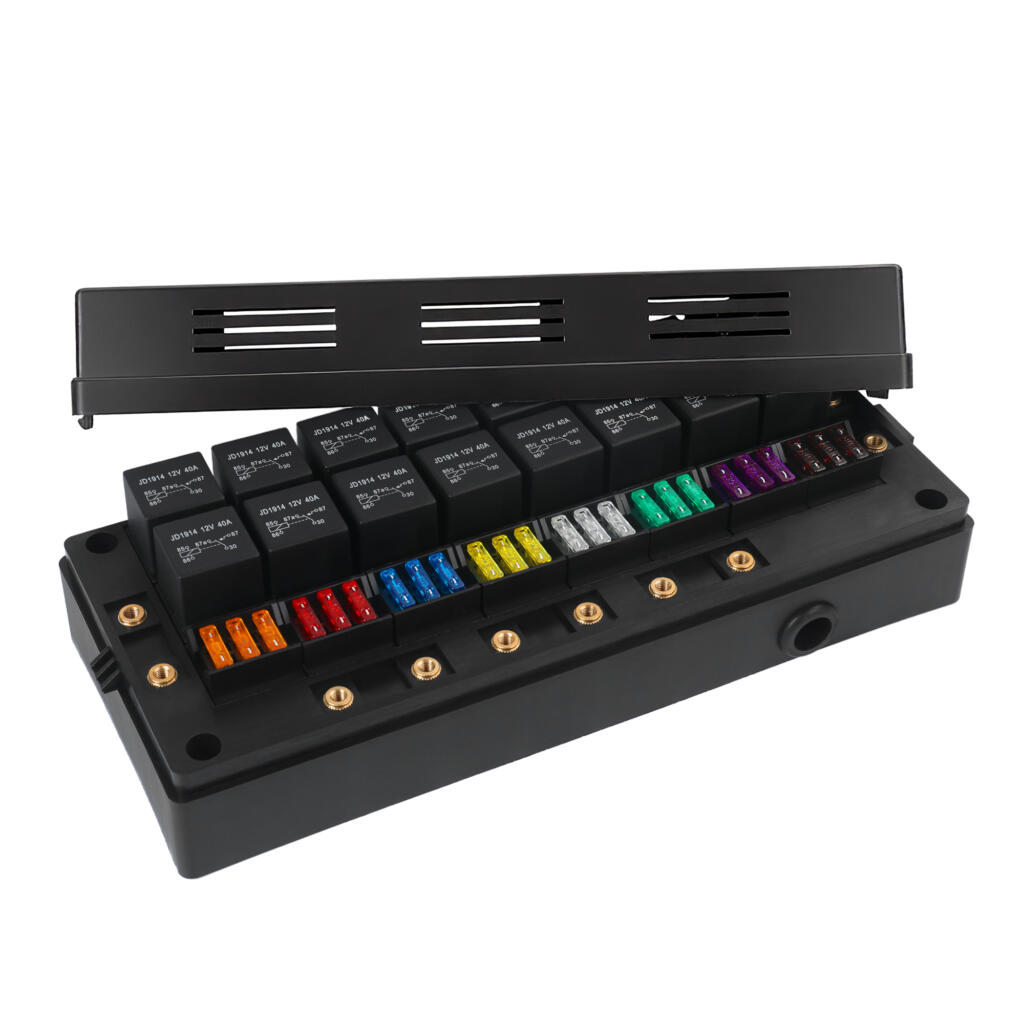
What is a Fuse Relay Box and How Does It Work?
Before diving into selection, we must understand the core components. A high-quality power distribution box integrates two critical functions:
■ The Relay (The Switch):
A relay is essentially an electromagnetic switch. It allows a low-current circuit (like a small dashboard switch) to control a high-current circuit (like a 40-amp light bar). This protects your dashboard switches from melting and ensures your accessories get full power.
■ The Fuse (The Protector):
The fuse is the safety guard. If a device malfunctions and draws too much current, the fuse blows, cutting the power before wires overheat or catch fire.
■ Why combine them?:
By housing relays and fuses together in one box (like the Daier RB series), you reduce the number of wires running through your vehicle firewall, minimize voltage drop, and make future maintenance incredibly simple.
Fuse Block vs Fuse Relay Box: What Is the Difference?
A fuse block holds fuses only. A fuse relay box holds both: the relays that switch the loads and the fuses that protect them, in a single enclosure.
The choice follows the job. If each accessory is switched by its own panel switch, or the current is low enough to switch directly, a fuse block is all you need. If the load is high current and has to be switched remotely, from a dash switch, a controller or a signal wire, you need relays as well, and a combined box saves you from mounting two units and running an extra loom.
| Feature | Fuse Block | Fuse Relay Box |
|---|---|---|
| What it holds | Blade fuses only | Relays plus blade fuses |
| Typical ways | 4, 6, 8 or 12 circuits | 3-way through 24-way, with 3 to 12 relay slots |
| Use it when | Accessories are switched locally, or draw low current | High-current loads are switched from a dash switch or a controller |
| Wiring | One main feed in, one protected output per circuit | One main feed in, plus a trigger wire for every relay |
| Typical example | FB-1714 12-way fuse block | RB-R6F6-W1 6-way fuse and relay box |
How to Choose the Right Capacity? (From 4-Way to 16-Way)
Selecting the right box size depends entirely on the scale of your project and how many accessories you plan to run. Here is a breakdown based on our product lineup:
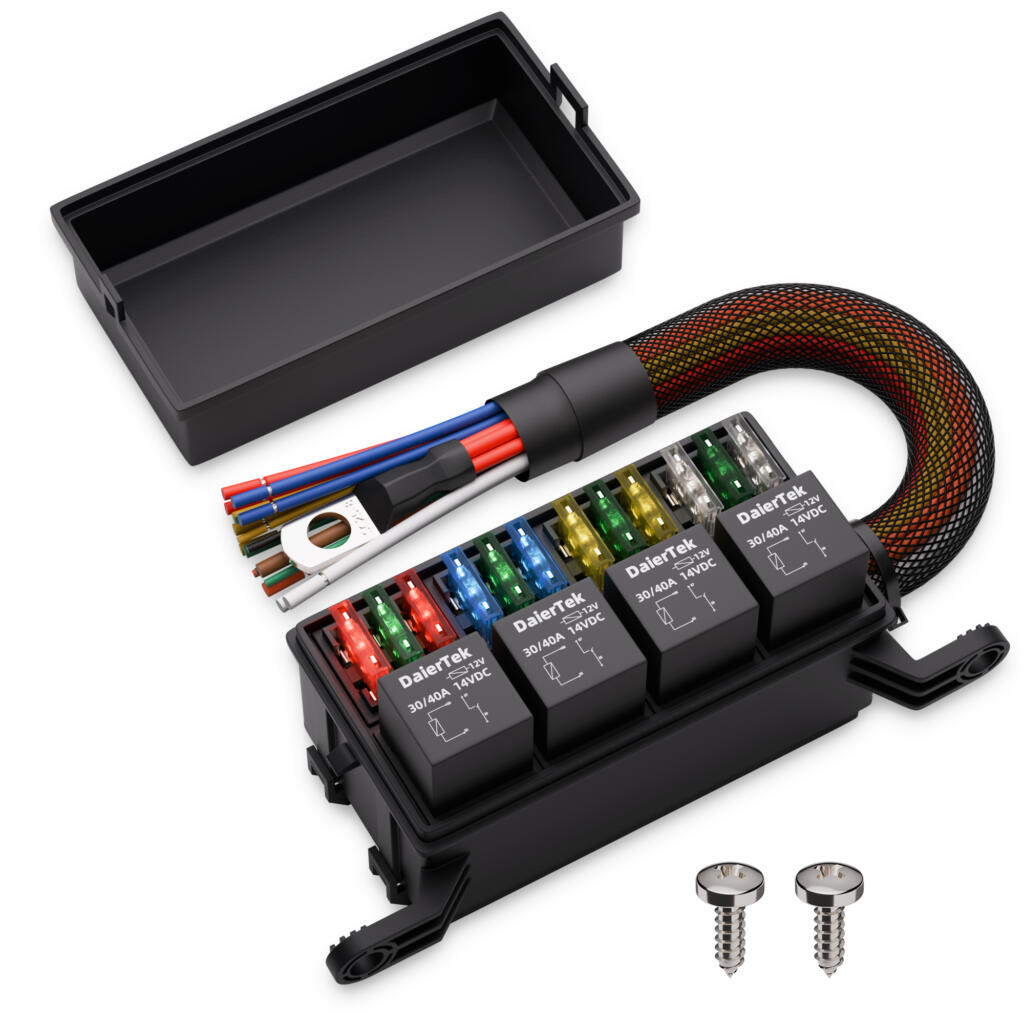
1. The Compact Solution: 4-Way & 6-Way Relay Boxes
Best for: Daily drivers, light off-roaders, small fishing boats, or tight engine bays.
Typical Setup: 1x Light Bar, 2x LED Pod Lights, 1x Horn Upgrade (Leaves room for 1-2 spare slots)
Our Recommendations:
- The 4-Way Box: Perfect for minimalist builds where space is strictly limited.
- The 6-Way Box (Standard & Waterproof): Our most popular choice. Note that our long rectangular model (sometimes labeled as “11-Way” due to total slots) falls into this category as it controls 6 circuits, just like the square waterproof version.
2. The Mid-Range Solution: 8-Way & 10-Way Relay Boxes
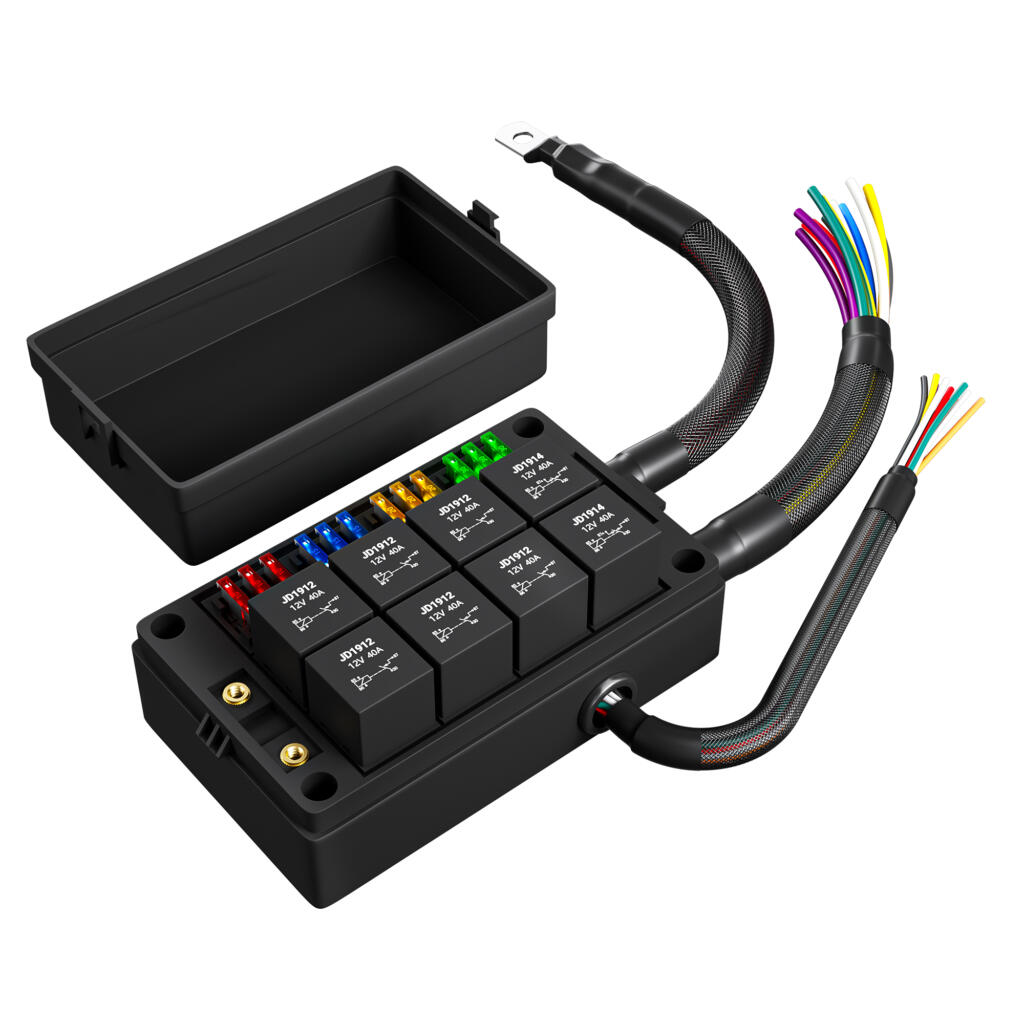
Best for: Full Overland builds, SUVs, and professional work trucks requiring more power distribution.
Typical Setup: Covers all lighting needs plus auxiliary power for Fridge/Freezers, Air Compressors, Camp Scene Lights, Communication Radios.
Advantage: These boxes provide a “sweet spot” for most enthusiasts. You get enough slots for a complete build without the box becoming too massive to mount.
3. The Heavy-Duty Solution: 16-Way Fuse & Relay Center
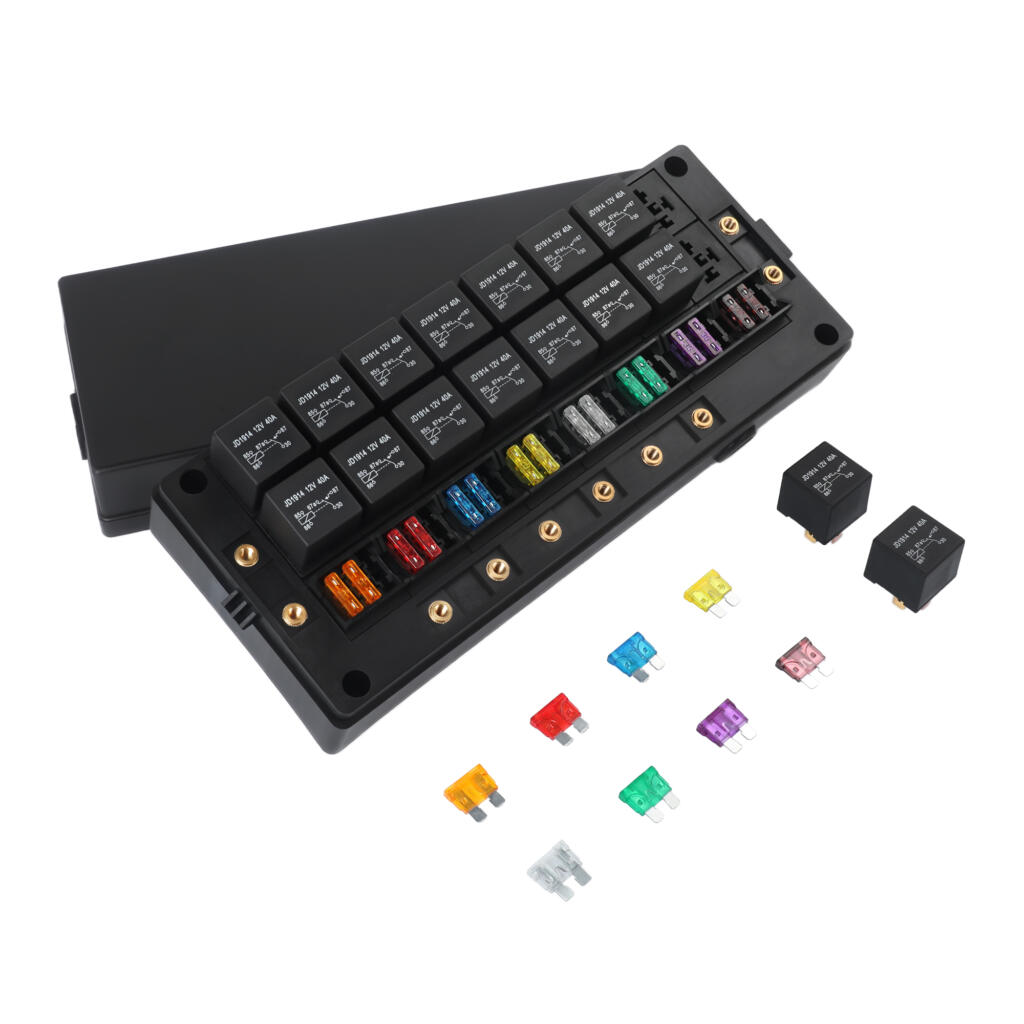
Best for: Emergency response vehicles, luxury yachts, RVs, and complex industrial machinery.
Capability: This is the ultimate central power hub. A 16-Way box allows you to manage the entire auxiliary system of a vehicle from one location.
Future-Proofing: Even if you only have 10 accessories now, choosing a 16-way box ensures you never have to rewire your system when you add more gear later.
Which Size Do You Need? Fuse Blocks and Fuse Relay Boxes by Ways
| Ways | Fuse block | Fuse relay box | Typical use |
|---|---|---|---|
| 3 to 4 | FH-721-1 4-way blade fuse block | RB-R3F3S-W 3-way pre-wired relay fuse box | One or two accessories on a small panel |
| 6 | FB-1713 waterproof 6-circuit block | RB-R6F6-W1 6-way fuse and relay box | Light bar plus auxiliary circuits |
| 8 | FH-723-1 8-way fuse block | – | Vehicle wiring and small distribution panels |
| 10 | – | RB-R10F10-W1 pre-wired 10-way fuse relay box | Full truck or boat accessory panel |
| 11 | – | RB-R6F11 11-way fuse relay box kit | Complex builds, workshop and fleet installs |
| 12 | FB-1714 12-way automotive fuse block | – | Dense accessory panels, 30A per circuit |
| 15 to 24 | – | RB-R10F15 15-way and RB-R16F24 24-way fuse and relay boxes | Fleets, motorsport and large power distribution |
What Is a Fuse Block Used For? (Car, Audio, Marine)
A fuse block takes one heavy main feed and splits it into individually fused circuits. It is used wherever several circuits have to be protected in one place and each one has to be replaceable on its own.
Car and truck accessory panels. Lights, dash cams, USB chargers, CB radios and 12V sockets. A 12-way block such as the FB-1714 covers a full accessory panel with 30A per circuit and 100A per block on 12V or 24V systems, and its LED indicator shows which fuse has blown.
Car audio. Amplifiers pull far more current than accessory wiring, so audio builds use MIDI and mini-ANL blocks rather than blade types. The AFS-30 4-way MIDI mini-ANL fuse block accepts 0 to 4 AWG input and 4 to 8 AWG output, with 30A, 60A and 80A fuses.
Marine and damp locations. Spray and salt water call for sealed housings. The FB-1713 waterproof 6-circuit fuse block protects six circuits up to 30A each with the terminals covered.
Vehicle wiring and small distribution panels. An 8-way block such as the FH-723-1 is a common safety solution for vehicle wiring and circuits, supplied with ten medium standard blade fuses from 1A to 40A.
Pre-wired vs. DIY Kits: Which is Better for Your Business?
This is the most critical question for OEM manufacturers and modification shops: Should you buy empty boxes or pre-wired solutions?
The Hidden Cost of DIY Wiring:
Wiring a relay box from scratch involves:
- ■ Cutting dozens of wires to length.
- ■ Crimping over 50+ metal terminals.
- ■ Inserting terminals into the housing (which is prone to error).
- ■ Wrapping and organizing the loom.
For a skilled technician, this can take 3 to 4 hours per unit. If you are a business, that labor cost adds up significantly.
The Daier Pre-wired Advantage:
Daier pre-wired relay boxes are assembled by automated machines and verified by professional QC teams.
- ■ Time Savings: Installation time is reduced to 20 minutes. You simply connect the main power, ground, and trigger wires.
- ■ Reliability: Machine-crimped terminals ensure a tighter connection than hand tools, reducing the risk of loose wires due to vibration.
- ■ Standard: We use high-quality GXL/TXL automotive-grade wire, which offers superior heat and abrasion resistance compared to standard PVC wire.
Verdict: For individual hobbyists, a DIY kit is a fun learning experience. For businesses, pre-wired boxes are the only way to scale profitably.
Waterproofing and Material: Why “Marine Grade” Matters?
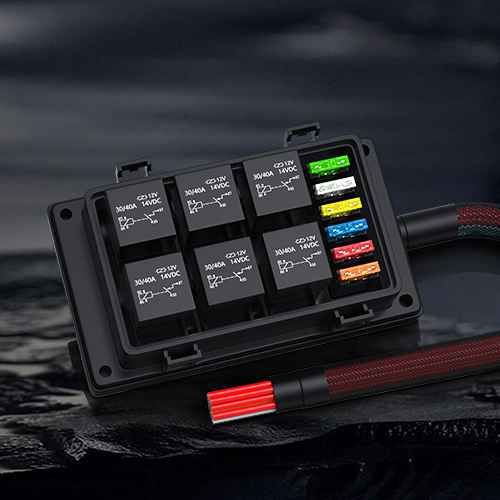
Not all plastic boxes are created equal. When your vehicle is crossing a river or your boat is hit by saltwater spray, your electrical system is under attack.
1. Material Science: PA66 vs. ABS
Many cheap competitors use ABS plastic, which becomes brittle and cracks under high engine heat. Daier uses Nylon PA66.
- Heat Resistance: Can withstand engine bay temperatures up to 120°C (248°F).
- Flame Retardancy: PA66 is naturally flame-retardant, adding a layer of safety.
2. IP Rating (Ingress Protection)
Look for a box with an IP65 rating.
- Dust Tight: No dust can enter the contacts.
- Water Resistant: Protected against low-pressure water jets from any direction.
Design Secret: Our boxes feature a silicone sealing gasket around the lid and rubber grommets at the wire exit points, creating a hermetic seal against moisture.
How Does a Fuse Block Work?
A fuse block has one main input and one fused output per circuit. On the FB-1714 the main feed lands on an M5 threaded stud rated for #4 to #6 cable, each circuit is protected by its own blade fuse, and the outgoing leads terminate on M4 studs sized for #12 to #16 wire. Total capacity is 100A per block, 30A per circuit, up to 32V DC.
When a fault occurs only that circuit’s fuse blows. The LED on the block shows which one, so a single fuse is replaced instead of the whole loom being traced. Because every circuit carries its own fuse, the rating can be matched to the wire and to the device, which is what keeps an overload from turning into a fire.
Wiring is the same pattern on every automotive fuse block: battery positive to the main stud through a short heavy cable, the block mounted close to the battery or the distribution point, one lead from each fused output to the accessory, and the accessory grounded to the chassis. For the difference between an inline holder and a block, see our guide to fuse holder basics.
How to Wire a Relay Box? (A Step-by-Step Technical Guide)
Even with a pre-wired box, understanding the wiring logic is essential. Here is the standard wiring protocol for most 4-pin and 5-pin relays used in our boxes:
- ➤ Pin 30 (High Power Input): Connects directly to the battery positive (+). Note: In our pre-wired boxes, these are usually combined into one thick main power cable.
- ➤ Pin 87 (Power Output): Connects to your accessory (e.g., the positive wire of your Light Bar).
- ➤ Pin 86 (Trigger/Switch Input): Connects to your dashboard switch. When you turn the switch on, this wire powers the relay coil.
- ➤ Pin 85 (Ground): Connects to the vehicle chassis or battery negative (-).
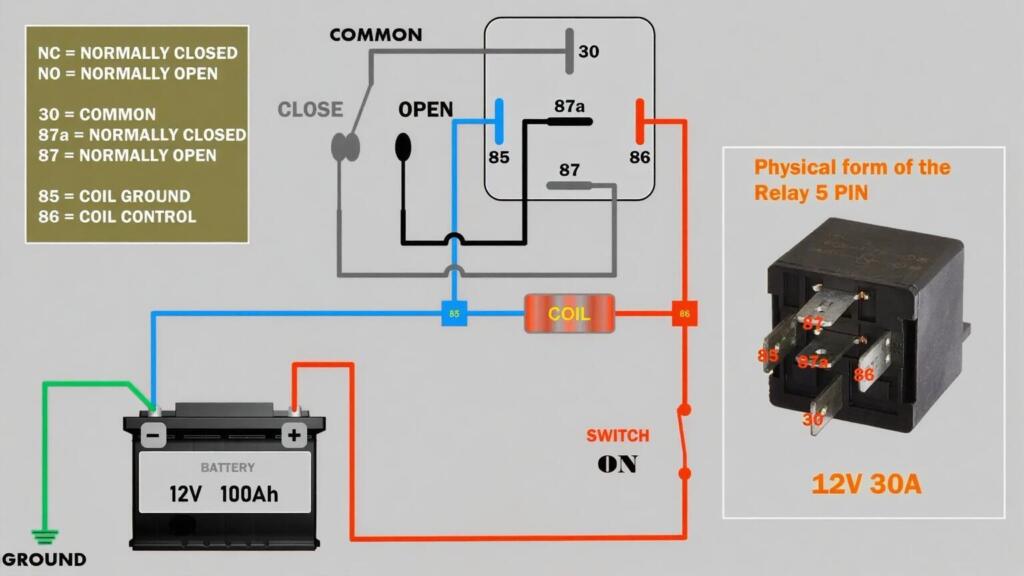
Note: In our pre-wired relay boxes, we have already handled the complex connections between the relay and the fuse slot for you. You simply need to connect the main power (30) and your accessory (87).
Frequently Asked Questions (FAQ)
▸ Can I use a 24V relay in a 12V fuse box?
Yes, but you must replace the relays. Most boxes come with 12V relays by default. If your truck or boat runs on a 24V system (common in heavy machinery), simply swap the 12V relays for 24V relays. The box housing and fuses generally handle both voltages fine.
▸ What is the maximum current (Amps) the box can handle?
This depends on the specific model, but generally, a standard Bosch-style relay slot can handle up to 40A. However, the total capacity of the box is limited by the main power wire gauge. Always check the datasheet.
▸ What is the difference between a 4-pin and 5-pin relay?
A 4-pin relay is “Normally Open” (power flows only when switched on). A 5-pin relay adds a center pin (87a) which is “Normally Closed” (power flows when switched off). For most lighting accessories, a 4-pin relay is sufficient.
▸ Should I choose a fuse block or a fuse relay box?
Look at how the loads are switched. If they are switched locally and draw modest current, a fuse block is enough. If they are high-current loads switched remotely from the dash or a controller, choose a fuse relay box so the relays and fuses sit in one enclosure.
▸ Can I use a fuse block on its own, without relays?
Yes. A fuse block does not contain relays and does not need them. It distributes and protects circuits that are switched elsewhere, for example by dash switches, an existing relay, or a device’s own on/off control.
▸ What is the difference between an automotive and a marine fuse block?
The difference is the enclosure, not the electrical rating. Marine and damp locations need a sealed, covered block so spray and moisture cannot reach the terminals, which is why a waterproof block such as the FB-1713 is the safer choice on a boat, a trailer or in an engine bay.
▸ Should I buy a 12V or a 24V fuse block?
Most blocks in this range cover both: the FB-1714 and FB-1713 accept 12V to 24V DC input and are rated to 32V DC maximum. Check the fuse rating and the wire size for the system you are building rather than the nominal voltage alone.
Conclusion: Upgrade Your Build with Daier
A reliable fuse relay box is the difference between a professional-grade build and a potential hazard. Whether you are outfitting a fleet of service trucks or customizing a weekend warrior rig, choosing a unit with the right capacity, waterproofing, and wiring quality is non-negotiable.
Ready to start your project?
- ■ For Individual Enthusiasts (DIY):
Need a single unit for your personal car or boat? We offer fast shipping and detailed support.
Shop Now on DAIER Online Store → - ■ For Business Partners (OEM/ODM):
Are you a modification shop or equipment manufacturer? We provide bulk pricing, custom wire harness lengths, and logo branding services.
Browse Fuse Relay Box Catalog →
Request a Quote for Bulk Orders →
